Sustainable Water Extraction on Campus
The Asian Institute of Technology (AIT) continually strives to improve and integrate sustainable technologies for water harvesting and extraction. AIT utilizes various water storage systems, including a closed-loop canal network and a reservoir, to ensure sustainable water consumption on campus. The institute has standardized tap water consumption, ensuring that each step of water production adheres to sustainable practices that safeguard the environment, biodiversity, and the well-being of surrounding communities.
Thai law on water extraction and usage
In Thailand, groundwater extraction is tightly regulated to prevent overuse and protect vital water resources. The primary law governing groundwater use is the Groundwater Act B.E. 2520 (1977), which has been updated over time to promote sustainable water use. This law requires individuals and businesses to obtain permits to extract groundwater, especially in areas designated as “Groundwater Protection Zones.” Violations, such as over-extraction, can result in penalties. The law’s goal is to maintain natural water levels and mitigate the risks of land subsidence, which can affect urban and agricultural areas.
In Pathumthani, where AIT is located, as well as in other provinces surrounding the Bangkok Metropolitan Region, groundwater extraction is closely monitored due to concerns like groundwater depletion, quality degradation, and land subsidence. Excessive extraction, particularly by private users, has exacerbated these issues. The Department of Groundwater Resources (DGR) has identified Pathumthani as a critical zone, noting problems like land subsidence and declining aquifer levels (IGES). As a result, the government has imposed measures to limit groundwater use, including restrictions on deep well extraction, particularly by public agencies.
Under these regulations, PWA water—treated tap water from the Public Waterworks Authority—cannot generally be used for non-essential purposes like garden maintenance. The Thai government, through laws such as the Waterworks Act, encourages the use of alternative water sources like rainwater harvesting, reclaimed water, and treated wastewater for non-potable uses. This approach is part of the broader sustainability goals to reduce reliance on municipal water supplies.
AIT Water Extraction and Usage Procedures
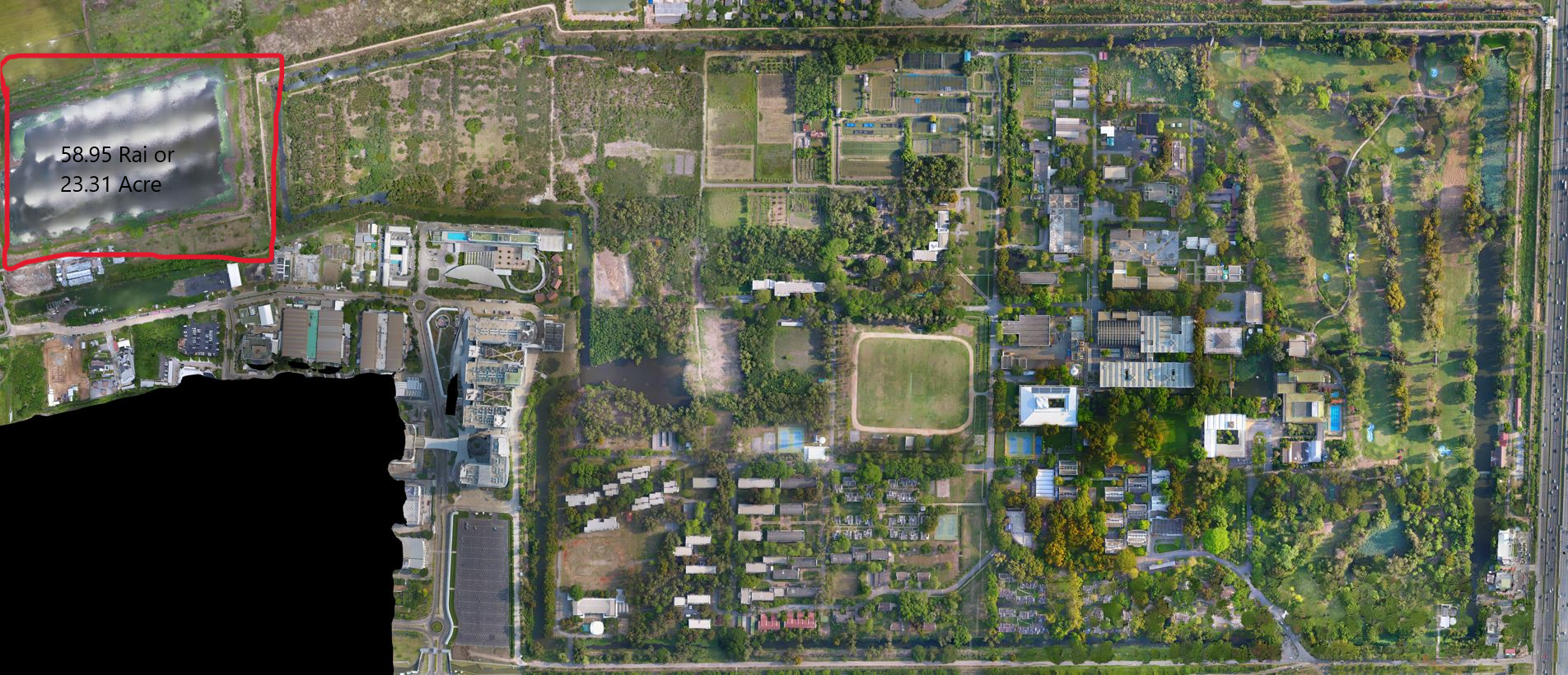
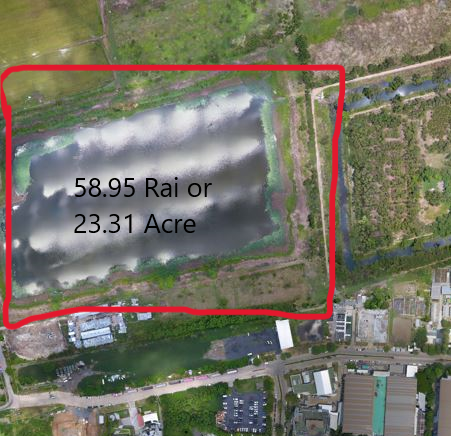
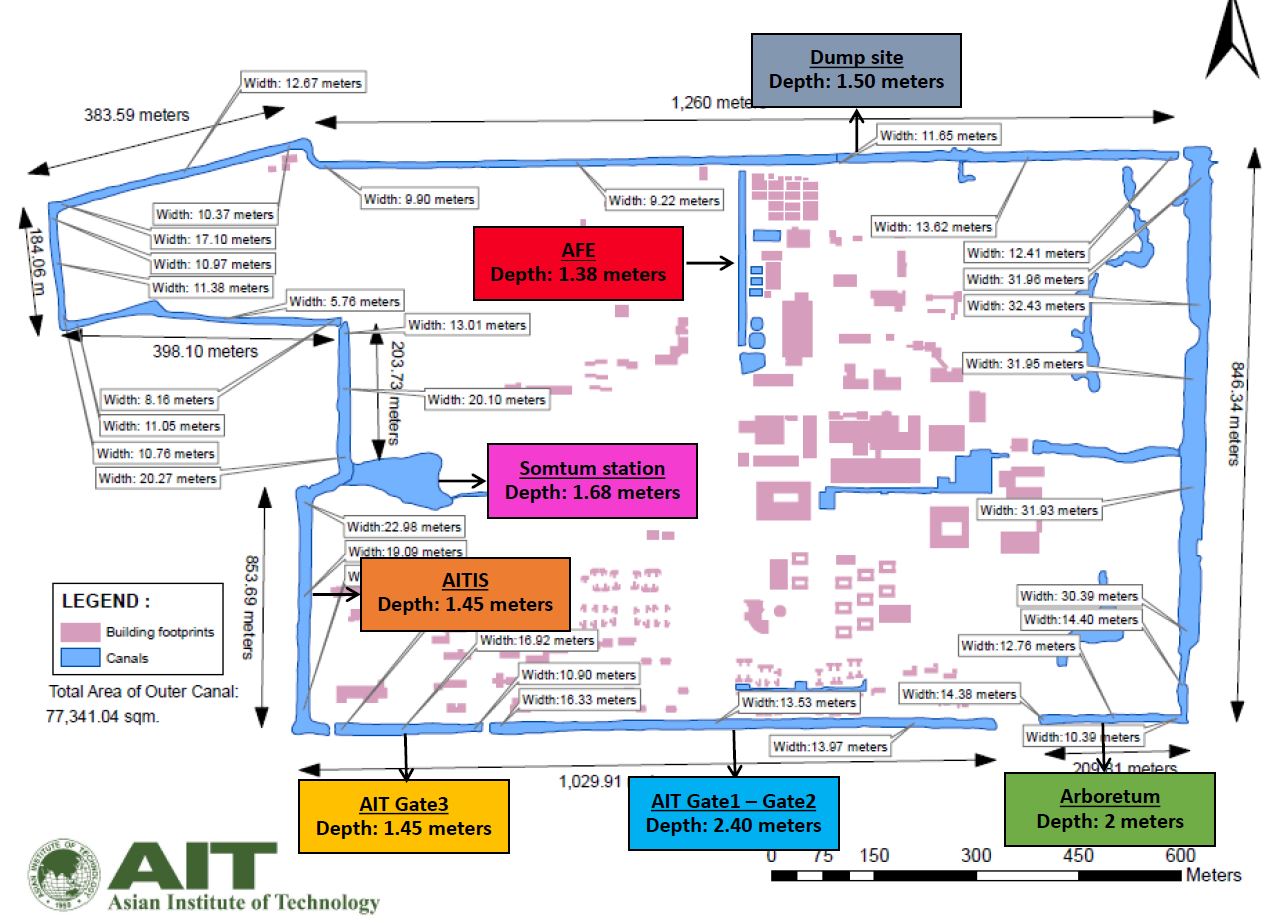
AIT’s water storage capacity includes a 59 Rai (23 acres) reservoir located at the west end of the campus. This reservoir supports water consumption during the dry season and also serves the surrounding local communities for agricultural purposes, especially during periods of drought. Additionally, AIT employs its closed-loop canal system, which spans 77,341 square meters and has a storage capacity of 92.809 cubic meters of water. The campus’s larger reservoir, covering 93,077.78 square meters, holds 167,539.8 cubic meters of water. These systems are critical in maintaining campus operations while minimizing the need for external water sources.
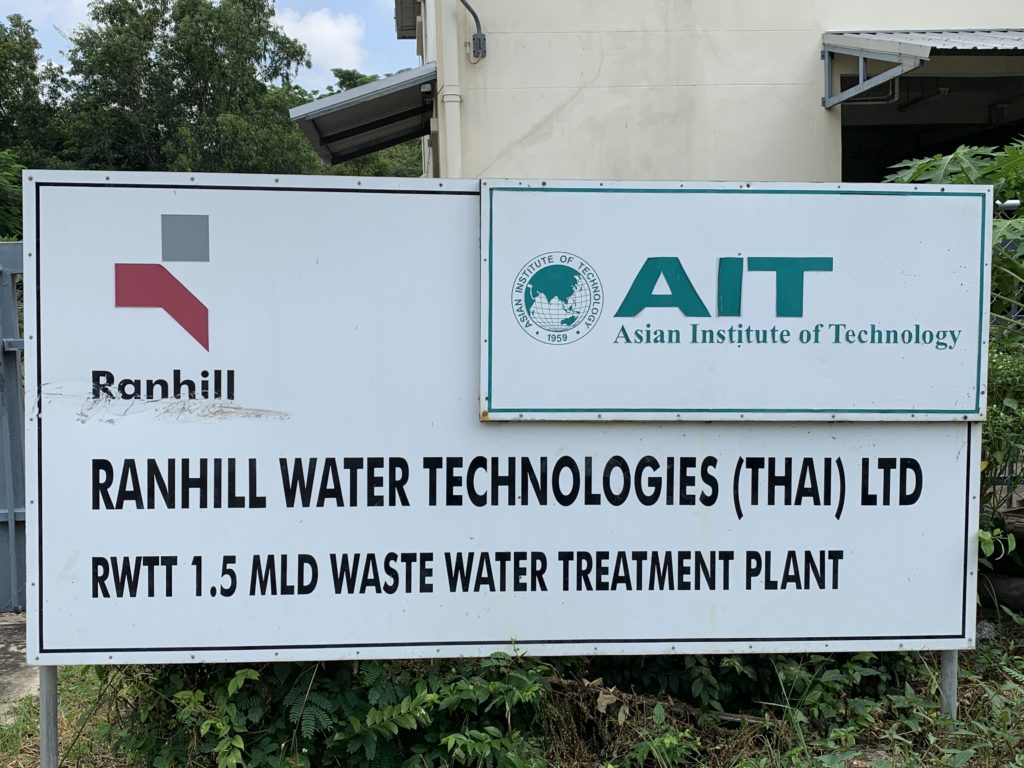
AIT’s Wastewater Treatment Plant (WWTP), operational since 2012, has a daily capacity of 1,500 m³ and treats campus wastewater to Thai standards, integrating treated water into AIT’s canal system for irrigation. This also supports the campus’s aquatic ecosystem as the recyled water are stored in campus canal system.
AIT’s commitment to sustainable water management aligns with its broader role as a steward of sustainability. By promoting water conservation, enhancing biodiversity, and fostering environmental health, AIT supports both the institution’s and the region’s long-term ecological and social well-being.